
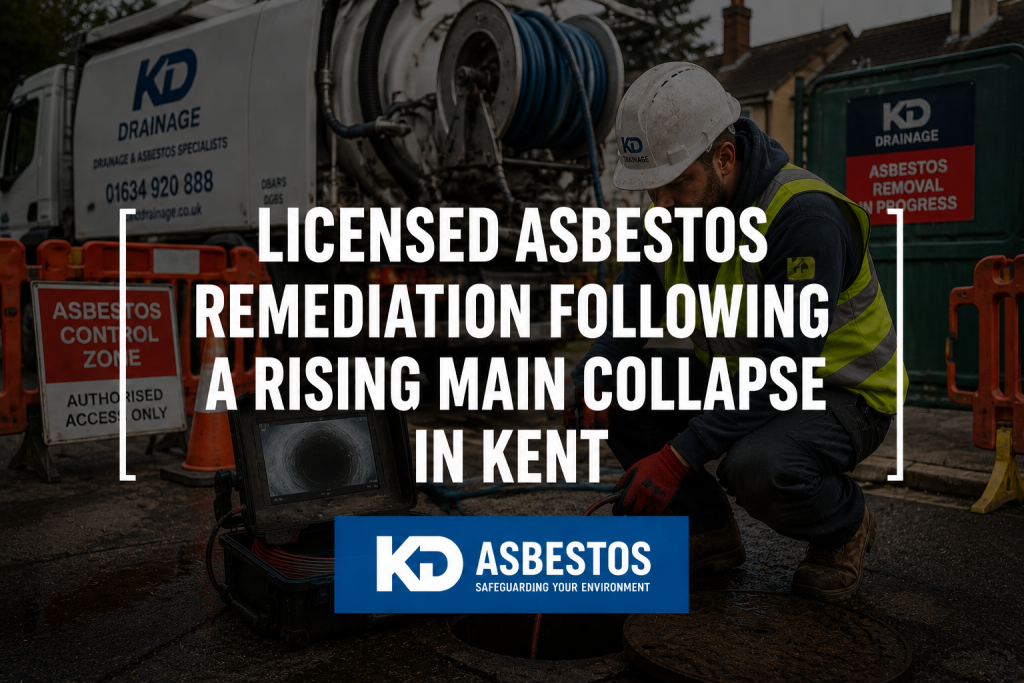
>Licensed Asbestos Remediation
Table of Contents
Licensed Asbestos Remediation Following a Rising Main Collapse in Kent
The discovery of asbestos during an infrastructure project can immediately change the scope, risk profile and programme of the work. Following the collapse of a rising main in Kent, Cappagh Browne required a specialist contractor capable of managing licensed asbestos-containing materials within a complex civil engineering environment.
Project Summary
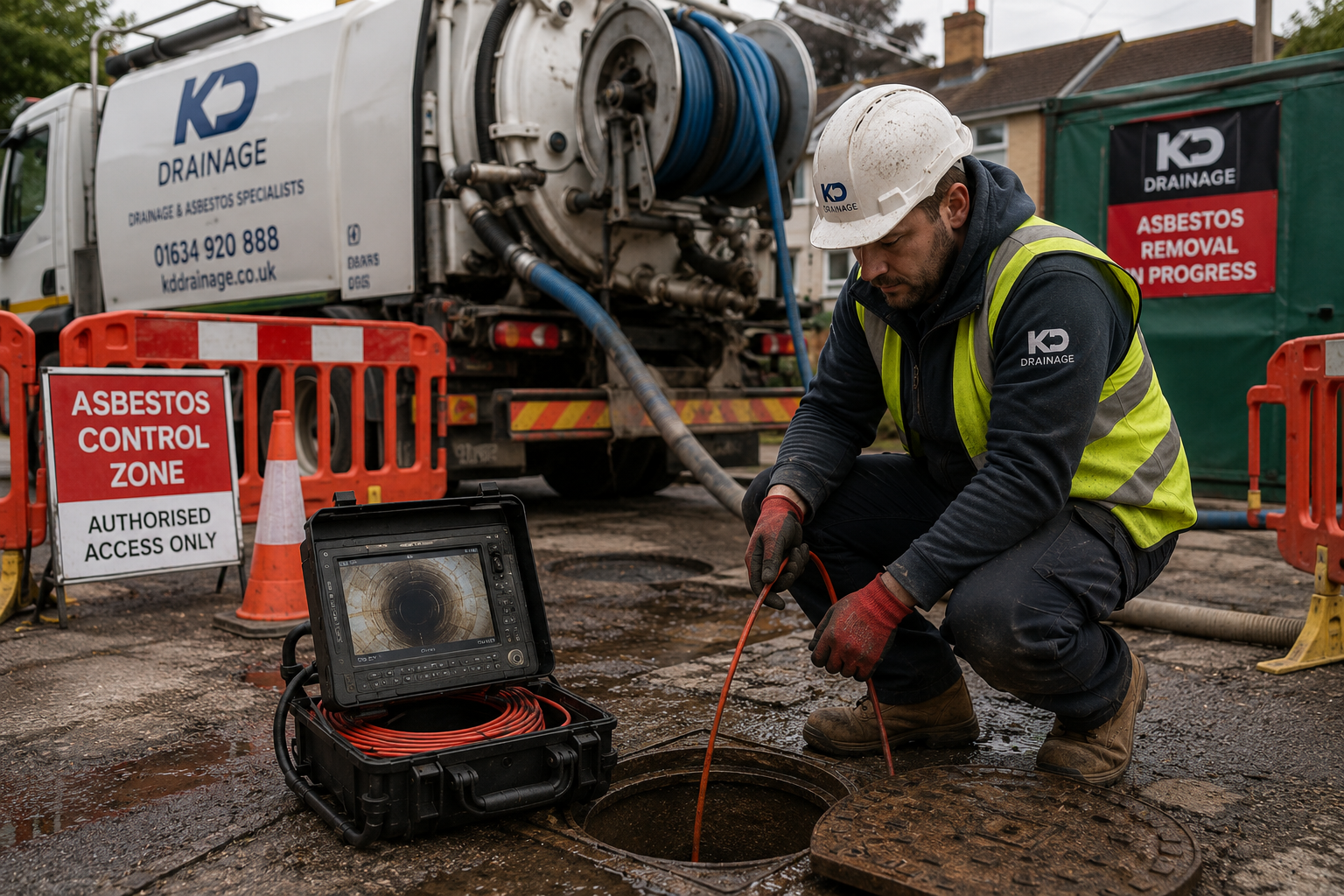
Following the collapse of an asbestos-contaminated rising main in Kent, KD Asbestos established a controlled working environment, completed the licensed asbestos removal and remediation phase, coordinated independent monitoring and clearance, and enabled the wider infrastructure repairs to proceed safely. The complete £120,000 project was delivered within a three-week programme.
Standard drainage work could not continue until the asbestos risk had been properly assessed, controlled and remediated.
KD Asbestos established a controlled working environment, completed the licensed asbestos-removal phase and enabled the wider infrastructure repairs to proceed safely.
The complete £120,000 project was delivered within a three-week programme.
Project Overview
- Client: Cappagh Browne
- Sector: Civil engineering
- Location: Kent
- Project value: £120,000
- Overall programme: Three weeks
- Primary asbestos challenge: Licensed asbestos-containing materials associated with a failed rising main
Asbestos Discovered During Infrastructure Works
The project began following the structural failure and collapse of a rising main.
Initial investigations identified licensed asbestos-containing materials associated with the failed asset. This introduced a serious additional hazard and prevented conventional excavation and drainage-remediation work from continuing.
The asbestos risk needed to be controlled before engineers could safely access, expose or repair the affected infrastructure.
This required careful coordination between the asbestos-removal operation and the wider civil engineering programme. The working environment also needed to accommodate restricted access, wastewater management and temporary measures required to keep the drainage system controlled.
Establishing a Controlled Asbestos Working Environment
KD’s licensed asbestos team designed and constructed a fully self-contained working environment around the affected area.
Negative Pressure
Negative-pressure management formed part of the controlled environment established around the affected work area.
Controlled Access
Controlled entry and exit arrangements were established to manage access to the asbestos working environment.
Decontamination
Appropriate decontamination facilities were provided as part of the licensed asbestos-removal operation.
Independent Services
Independent electrical and water supplies supported the controlled working environment throughout the asbestos phase.
Welfare Provision
Dedicated welfare provision was incorporated into the project arrangements for the specialist team.
Monitoring & Clearance
Independent air monitoring and clearance testing were undertaken before follow-on work commenced.
Establishing these controls allowed the licensed asbestos work to be undertaken without exposing other site personnel or compromising the surrounding working environment.
It also gave the wider project team a clearly managed route from the initial discovery through to clearance and the resumption of the infrastructure repairs.
Licensed Asbestos Removal and Remediation
Once the controlled environment had been established, KD’s licensed team completed the asbestos-remediation phase.
The work had to be carefully sequenced because the asbestos-containing materials were directly associated with failed drainage infrastructure. Removing the material could not be treated as an isolated operation; it needed to support the safe exposure, assessment and subsequent repair of the rising main.
KD managed the asbestos risks while coordinating with the drainage, tanker and civil engineering teams working across the wider project.
Integrated Project Delivery
Asbestos Remediation Was Only the First Stage
The asbestos-containing materials were directly associated with the failed infrastructure. The remediation therefore had to be carefully coordinated with the teams responsible for excavation, wastewater management, drainage investigation and structural repair.
This integrated approach reduced the number of separate contractors requiring access to the controlled area and helped maintain clear responsibility for health, safety, communication and programme delivery.
Independent Monitoring and Clearance
Independent air monitoring and clearance testing formed an important part of the asbestos-remediation process.
The drainage and civil engineering phases could only proceed once the controlled asbestos work had been completed and the required clearance had been achieved.
This provided assurance that the affected area had been properly remediated and that follow-on teams could begin work under the agreed site controls.
Enabling the Wider Infrastructure Repair
Following completion and clearance of the licensed asbestos work, KD’s specialist drainage and civil engineering teams were able to continue investigating the failed network.
The subsequent infrastructure works included:
- Robotic CCTV investigation and condition assessment.
- Controlled excavation of collapsed assets.
- Tanker and temporary over-pumping support.
- Rehabilitation of 175 metres of pipework.
- Installation of 14 metres of new 300mm high-pressure pipework.
- Testing, commissioning and restoration of the network.
These works are covered in greater detail within the separate drainage-engineering case study. On this project, however, the critical first stage was the safe control and remediation of the asbestos-containing materials.
Without the specialist asbestos phase, the wider repair could not have proceeded safely.
Managing Asbestos Within a Live Civil Engineering Project
Asbestos remediation within an infrastructure environment can be considerably more complicated than removal from an accessible building component.
Potential challenges can include:
Unstable Assets
Damaged or structurally unstable infrastructure can make asbestos remediation significantly more complex.
Restricted Access
Underground infrastructure and excavation work can create restricted or difficult working conditions.
Contaminated Pipework
Asbestos-containing materials can be associated directly with pipework and surrounding infrastructure.
Active Drainage Flows
Wastewater and drainage flows may need to remain carefully controlled while remediation takes place.
Multiple Disciplines
Asbestos specialists may need to work alongside drainage, tanker, excavation and civil engineering teams.
Programme Pressure
Critical infrastructure failures can create significant pressure to remediate the hazard and restore services quickly.
These conditions require more than a standard removal approach. The asbestos contractor must understand how its work affects the wider engineering programme and coordinate carefully with the principal contractor, site management and follow-on trades.
How the Project Progressed
Identify the Asbestos Risk
Licensed asbestos-containing materials associated with the failed rising main were identified during the initial investigation.
Establish Site Controls
KD created a fully controlled working environment incorporating containment, negative pressure, decontamination and dedicated services.
Complete Licensed Remediation
The asbestos-containing materials were remediated by KD’s licensed asbestos team under the established site controls.
Monitoring & Clearance
Independent air monitoring and clearance testing were completed before the next stage of work could proceed.
Enable Infrastructure Repairs
Following clearance, the drainage and civil engineering teams could safely investigate, repair and rehabilitate the failed network.
Project Outcomes
KD successfully completed the licensed asbestos phase and supported the restoration of the failed infrastructure within the three-week programme.
Key Outcomes
- Licensed asbestos-containing materials safely remediated.
- A fully controlled working environment established.
- Negative-pressure controls maintained.
- Decontamination arrangements provided.
- Independent air monitoring and clearance testing completed.
- Follow-on drainage and civil engineering works enabled.
- Regulatory requirements satisfied.
- Full operational capability ultimately restored.
- Complete project delivered through one coordinated contractor.
Reducing Risk Through Integrated Project Delivery
When asbestos is discovered during drainage, utility or civil engineering works, appointing an isolated asbestos contractor can create additional coordination and communication challenges.
The asbestos-removal programme must integrate with excavation, temporary flow management, engineering access, repairs and final reinstatement.
KD’s combined experience allowed the asbestos risks and wider infrastructure requirements to be considered together.
For Cappagh Browne, this meant one coordinated programme and one accountable team managing the project from asbestos containment through to the restoration of the drainage network.
The KD Approach
One Contractor. One Programme. One Point of Responsibility.
Combining specialist asbestos capability with drainage and civil engineering expertise allowed each stage of this complex project to be coordinated through a single delivery team.
Do You Need Support With Asbestos-Containing Pipework?
Asbestos-containing materials can be discovered in drainage systems, service ducts, underground infrastructure, plant rooms and older industrial assets.
If suspect materials are identified, work should stop until the risks have been properly assessed and the appropriate controls established.
KD Asbestos supports commercial, industrial and civil engineering clients with:
- Licensed asbestos removal.
- Asbestos surveys and testing.
- Controlled asbestos enclosures.
- Asbestos pipework remediation.
- Asbestos waste collection and disposal.
- Air monitoring and clearance coordination.
- Complex projects involving multiple trades.
- Remediation within operational environments.
Have You Discovered Asbestos During Infrastructure Works?
If asbestos-containing materials have been identified during drainage, excavation, refurbishment or infrastructure works, KD Asbestos can help assess the risks and establish the appropriate controls. Our specialist team supports complex commercial, industrial and civil engineering projects throughout Kent and across the UK.